Accounting is accomplished using dedicated process-bound objects that are linked 1:n with the respective service orders. A service order usually includes a statement. The model allows, however, due to the 1:n relation, also several statements in the context of a service order (e.g., for time-shifted confirmations with longer order processing).

Service mission confirmation and accounting
Service accounting
Service appointments, response
A statement includes organizational attributes, an individual scope of supply, times, expenses and documents. Times and expenses refer to a delivery item in the scope of supply of the statement on which the invoiced hours or expenses to be billed are accumulated.
The scope of supply of a service order and of a statement refer to identical (case-specific) products or services. After accounting has been completed, the planned quantities and prices in the scope of supply of the service order are updated with the invoiced quantities and prices from the scope of supply of the statement.
See also: Standard procedure

Admin: Information about the status-driven creation and presetting of a statement, see Managing the service response. Please also see the note on the prerequisites for customizing accounting.
Accounting sheets
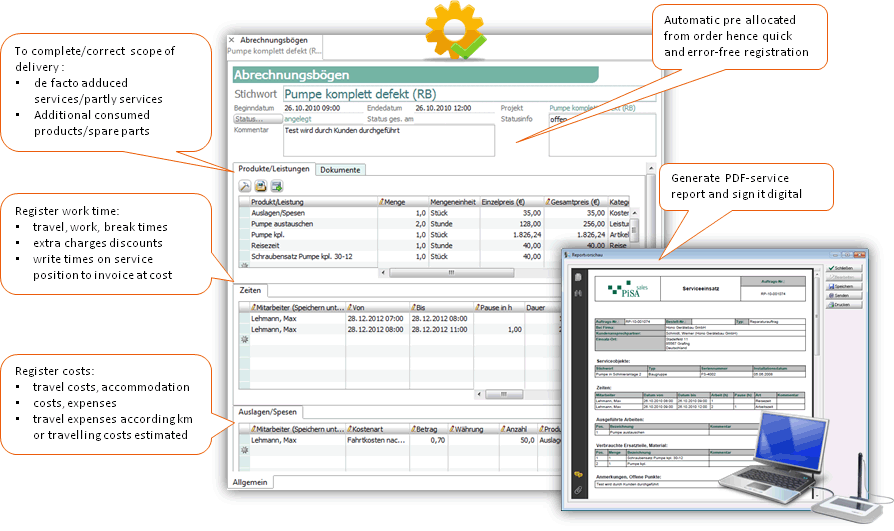
Using Accounting sheets when processing a service order, service technicians can enter all accounting data directly in the system, i.e., actually performed services, spare parts used, work times, breaks, travel times, incidental costs like travel expenses, overnight-stays and business expenses.
Accounting options
For billing service orders correctly, service technicians or the office staff can
- evaluate the captured times including surcharges and reductions and assign them to service items (e.g. for billing assembly services or travel times by effort at specific hourly rates),
- calculate captured costs depending on the type of cost by quantity or other methods, take account of surcharges and reductions, and assign them to service items (e.g., for billing travel costs by distance or distance zones, or of accommodation expenses by quantity),
- calculate service order items differently, e.g., by the time and the cost of the materials used, by list price, on warranty or goodwill, …
Technical accounting
Technical accounting for a service mission consists of updating the customer installation in the system, as well as evaluating and maintaining FAQs and trouble codes.
Updating the customer installation
You can exchange parts via the Customer installation function of the service order. This function only appears if the Service objects tab is active. After selecting a service object, it appears as a top object in the installation tree. If not, all products installed at the customer's appear as top objects in the tree.
Closing a service call
After completing the service appointment and accounting, the Status of the initial service call needs to be set to the final status in accordance with the call type.