Non-plannable service measures are processed based on a service call. After the customer has been identified, the service call can be created, captured, edited, and a service order can be created directly from the customer or service object form, as well as from the sales or service order, e.g., to handle a complaint. Selecting the call type (question, complaint, failure) classifies the call and provides a workflow for its treatment through statuses specific for the case, as well as standard activities. Information relevant for handling complaints or failures, e.g., contact data (contact person, external partners), fault descriptions, affected service objects, or customer contracts can be stored at the call and be inspected.

Service calls
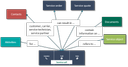
Relations between a service call and other objects
Staff members of service departments are thereby enabled to check the available contracts directly from the call form (contract period, agreed service coverage, response times) or to retrieve data about the service object concerned, e.g., warranty, its expiry, or product structures, by taking a look at the customer installation.
To derive problem-solving proposals, you can search for relevant entries in the FAQ or trouble code database using special functions. For time-critical processes, the integrated escalation management can evaluate the customer’s or service object’s response times, and automatically inform the persons responsible.
- Quick capturing directly from a phone call (CTI), from an email (email connector) or at the affected service object.
- Several call types (inquiry, complaint, fault etc.)
- Contract audit by an integrated view on customer contracts.
- Quick assignment of the reported service object, and access to the service history (Chronos).
- Automatic determination of relevant FAQs or error codes for the service object supports solving the problem.
- Assignment of important contact data (contact person, external partners) for information and required documents.
- Assignment of contact types including their roles (service partner, person responsible etc.).
- If needed, transfer into a service-action request, including automatic acquisition of relevant data from the call.
- Integrated escalation management.