The communication between company headquarters and the file server is performed by means of web services.

Communication principle
Every subsidiary works with a file server in the LAN (derby). It saves all documents that are viewed, created or edited by staff members of the subsidiary. In addition, the documents that have been distributed by the company's headquarters to the subsidiary are stored on the file server. The document inventory on the file server is a subset of the total stock managed by the application server.
New or edited documents are transferred asynchronously from the file server to the application server immediately after saving or checking in the documents. This ensures that the users don’t have to wait for the file transfer to complete. They can instantly continue working with the system.
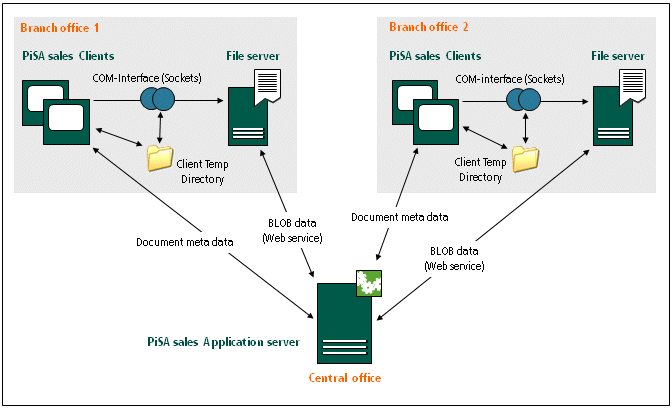
Communication between application servers in the company headquarters and file server of the subsidiaries
It is also possible to have the modified documents transferred asynchronously to the application server by means of a batch process (e.g., once per night). This saves bandwidth during the working hours and makes sense if documents are edited only in a single subsidiary.
The adjustment of different document versions between the file server and the application server is triggered by a batch process of the file server (at regular intervals, e.g., once every night). The application server retrieves the BLOB records of all documents of the file server. It compares these records with the central BLOB records. Depending on the result of the comparison, more current documents are transferred to the file server, or documents on the file server are deleted.
Document access is always controlled by the document status maintained by the application server. This central access control makes sure across subsidiaries that staff members don’t have access to documents that are being edited or transferred. Nevertheless, it is possible to view or edit a document that was modified within the same subsidiary, and is still being transferred.
The errors occurring in the process of transferring a current document version from the file server to the application server (e.g., cancelled transmission) are handled by the batch process.